

We are all given the same 24 hours in a day. No upgrades, no rollover minutes. Just time quietly passing, whether we pay attention to it or not.
The average American spends roughly 692,040 hours on Earth. That’s about 28,835 days, 948 months, or 79 years.
That might sound abstract, but your body experiences it very literally.
Because how you spend your time is how you spend your health.
Your hormones adapt to it.
Your nervous system responds to it.
Your metabolism and immune system adjust around it.
So let’s look at where those hours actually go and what they’re quietly doing to us.
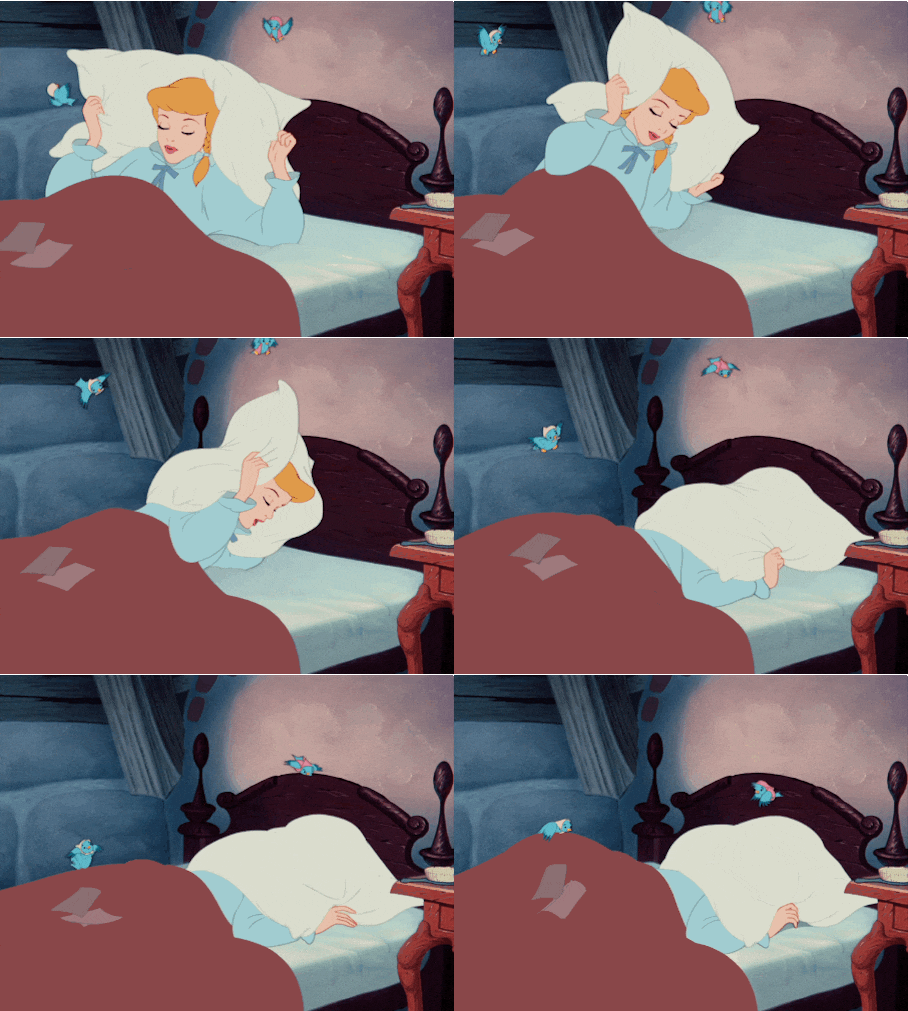
Sleep: Where Health Is Either Built or Borrowed
Americans spend about 33 years of life in bed, including time spent tossing, turning, and trying to fall asleep.
That alone should make sleep the most important wellness category we talk about.
Sleep is when your body regulates hormones, repairs tissues, and clears metabolic waste from the brain. When sleep quality is poor, everything else has to work harder to compensate.
This is why people often feel noticeably better after upgrading their sleep environment, even without changing diet or exercise. A supportive mattress, breathable organic sheets, and reducing light exposure at night can dramatically improve sleep quality over time. Even something as simple as magnesium glycinate before bed can make falling asleep feel less like a nightly battle.
If you’re spending decades there, it makes sense to make that space work for you instead of against you.

Eating and Drinking: Repetition Becomes Biology
We spend nearly four years of our lives eating and drinking.
That means food isn’t just nutrition. It’s repetition. Every day, for decades.
What often gets overlooked is that it’s not just what you eat, but what touches your food. Cooking more meals at home helps, but using non toxic cookware and storing leftovers in glass food storage containers reduces daily chemical exposure without changing what’s on your plate.
These are the kinds of upgrades that don’t feel dramatic, but quietly support digestion, hormone balance, and long-term health simply because they’re used every single day.

Driving: Stress You Don’t Track, But Your Body Does
The average American spends 2.6 years of life driving.
Most people don’t think of driving as a health factor, but your nervous system does. Traffic raises cortisol, tightens muscles, and keeps your body in a low-level stress state.
Small adjustments here matter more than people expect. Improving posture with lumbar support for car seats or reducing visual strain with blue light filtering glasses can help your body exit stress mode faster instead of carrying it into the rest of your day.
You don’t need to optimize your commute. You just need to stop letting it drain you quietly.

Working: Productivity Has a Physical Cost
We spend about 10 full years working.
Work can be meaningful, but long hours and poor ergonomics have real physical consequences. Chronic stress, repetitive strain, and prolonged sitting all influence inflammation, sleep quality, and hormone regulation.
This is why people often feel better after changes that seem small on paper. Sitting in a supportive ergonomic chair, having the option to stand with a standing desk converter, or reducing physical strain during the workday can meaningfully change how your body feels by the evening.
Your body doesn’t care if stress is productive. It just responds to exposure.

Screens: The Biggest Trade Most People Don’t Notice
Between television and internet use, Americans spend over 35 years of life on screens.
That time often replaces movement, sunlight, and sleep without anyone consciously deciding that’s the trade they want to make.
Extended screen exposure affects circadian rhythm, eye strain, and sleep quality, which is why people often sleep better simply by reducing evening screen intensity or using screen light filters or blue light blocking glasses for screens.
Technology isn’t the enemy. Unchecked exposure is.

Exercise: The Smallest Investment With the Biggest Return
Despite everything we know, Americans spend less than a year and a half exercising over an entire lifetime.
Movement regulates blood sugar, hormone balance, immune function, and mental health. It doesn’t need to be extreme to matter.
People who move consistently aren’t more disciplined. They’ve just made movement easier to access. Keeping resistance bands at home nearby or using a walking pad for desk use removes friction and turns movement into something that fits into real life.
Consistency always beats intensity.
My Take
Let’s be honest. Most of your health isn’t decided by the big things you swear you’ll do someday. It’s decided by the boring, sneaky hours you don’t think count. The late nights that turn into habits. The sitting that turns into stiffness. The scrolling that quietly eats the time you thought you didn’t have. Your body isn’t dramatic about it. It doesn’t yell. It just adjusts. Slowly. Patiently. Until one day you’re tired for “no reason” or stiff for “no reason” or stressed for “no reason.”
Spoiler: there was a reason. It was Tuesday. And Wednesday. And the year after that.
The good news is it works the other way too. Better sleep stacks. Movement stacks. Less friction stacks. Tiny upgrades quietly change the trajectory
You don’t need motivation.
You need fewer habits that quietly drain you.
Disclaimer: This blog is for general information only and is not medical, nutritional, or professional advice. I am not a licensed healthcare provider. Always consult a qualified professional for guidance specific to your health or skincare needs. Information here may not be complete or suitable for every individual, and I am not responsible for any actions taken based on this content. This blog may contain affiliate links, meaning I may earn a small commission at no extra cost to you. Use of this site means you accept responsibility for your own decisions.
